Sara & Nik’s Podcast:
Dragan Berak
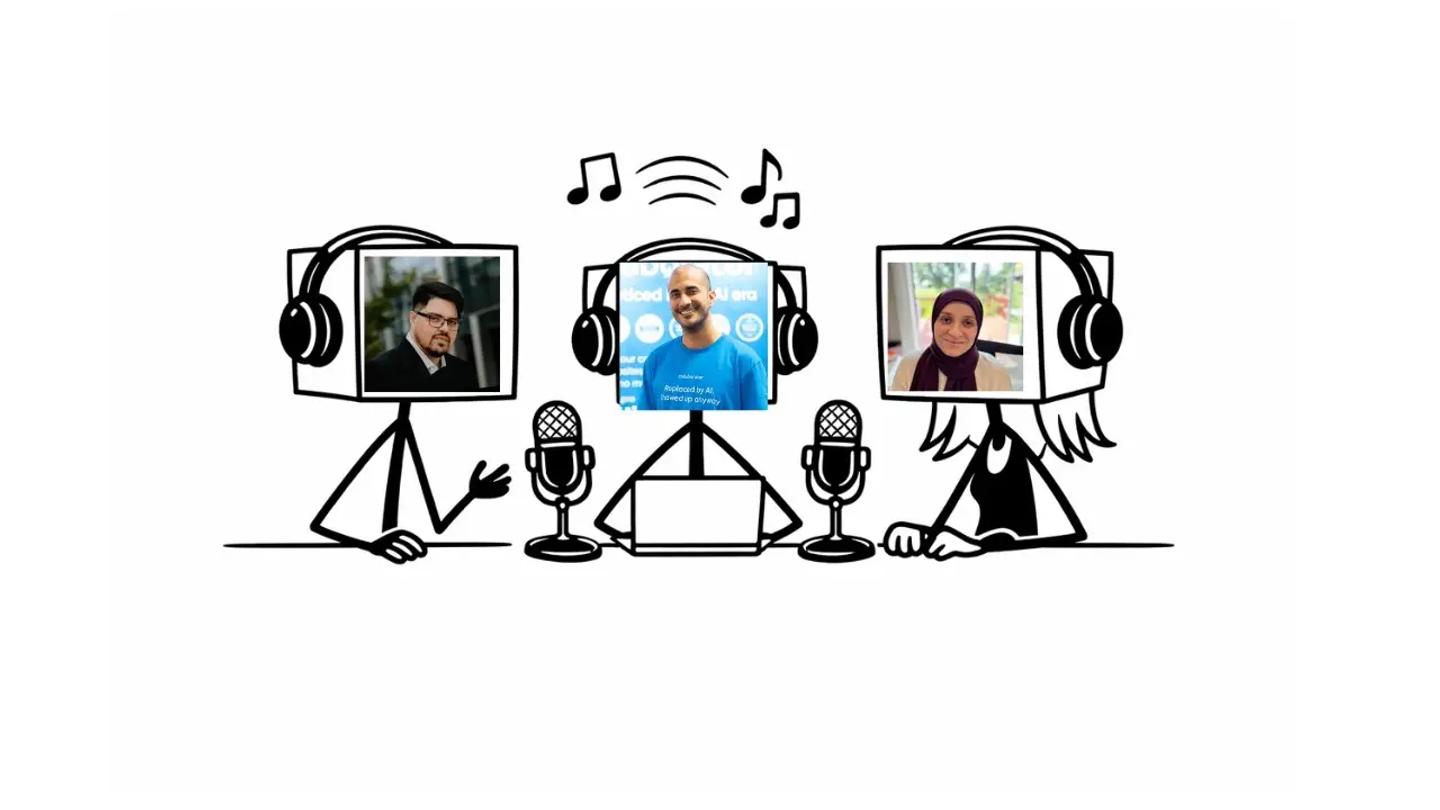
Dragan Berak joins Sara & Nik to discuss AI workflows in the AI era and how good AI search optimization equals good SEO.
Hosted by Sara Taher & Nik Vujic
Published
4 min read

Key takeaways
-
Dragan Berak
It’s humans who do good SEO; AI is just the tool.
-
Dragan Berak
The problem with the pro-AI crowd today is treating AI as an agent instead of a tool.
-
Dragan Berak
LLMs like Claude are nothing more than text predictors – “it has to give you an answer”
-
Dragan Berak
Google is still figuring out how to monetize AI.
-
Nik Vujic
Today, people still don’t know how to optimize their content for AI.

About this conversation
Dragan Berak brings his 15+ years of SEO experience to today’s episode of Sara & Nik SEO Podcast to discuss the role AI plays in SEO today and how SEO experts can use AI tools to create better SEO strategies.
The way Dragan sees it, AI tools are great additions to the SEO landscape, but how they’re used makes all the difference. His point is that AI tools don’t come with an instructions manual; you’re not told how to use them to do good SEO. This highlights a critical point that many still seem to miss: it’s humans who do good SEO. AI is just a tool.
Why SEO in 2026 Demands Multiple Specializations
Dragan’s career started in e-commerce, then moved to SEO, which eventually put him in charge of an SEO team at Gentoo Media. It’s here where he specialized himself in several fields, including e-commerce, affiliate marketing, iGaming, and SaaS, aside from running a small boutique consultancy as a side project.
Dragan opted for in-house work for several reasons, the primary one being the opportunity to work with enterprise tools and dive into the hidden layers of the business; understand what makes it tick. This, combined with his consultancy gig, allowed him to face varied problems and work with different teams and websites.
The underlying idea, as Dragan explains, is that this type of multi-specialization appears to be the trend among top SEO professionals today. Especially in the AI era, where using AI tools can appear deceivingly simple.
Why Using AI Blindly Can Be A Costly Mistake
Right out-of-the-gate, the main problem with using AI recklessly is the token limitation, a problem that Dragan is well too familiar with.
“I'm hitting the wall with Claude more often now”.
Because of this, responsible and thoughtful usage is a must, he explains, which highlights a critical problem with the pro-AI crowd today: they treat AI like an independent agent, instead of the tool it is. This leads to the next problem in line: over-reliance on AI.
When it comes to using AI, or Claude more specifically, for SEO automation, Dragan describes a multi-layered, structured process:
- Create separate projects with distinct brand guidelines
- Build skills for content briefs
- Produce client-branded reports
- Analyze and compare competitor backlinks
- Perform crawl analysis
- Record daily digests from Search Console, analytics, and server logs
What he won’t do, however, is trust Claude blindly. That’s because LLMs like Claude are nothing more than text predictors:
“It's built in a way that it has to give you some kind of an answer. It has to.”
This gives rise to a problem that remains widespread among LLMs, although not at the same intensity as a year ago, for instance: hallucinations. Claude can hallucinate numbers occasionally, which means Dragan never uses Claude, or any other LLM alone, for keyword research. His goal is to ascribe 90% of the workflow to AI, while he handles the rest of the 10% himself: “Human in the loop don't forget that”.
This is what led him to create a habit of constantly pushing back against Claude’s output, whether it’s asking for clarifications, demanding sources for data and numbers, and even cross-checking the information himself for extra certainty.
Because of this, Dragan is well aware of how enticing and dangerous LLMs are for juniors who tend to take answers for granted and have no idea how to differentiate between a good and bad output.
Why SEO Basics Still Win
The topic of discussion moved to zero-click searches and Google’s direction in 2026 and Dragan put it out bluntly: Google is still figuring things out.
The Google event for SEOs in Zurich in December 2025, focused on technical optimization, made that point very clear: Google is trying to save resources and is still trying to understand how to monetize AI features. Until that settles, “a lot of pages are going out of index”.
This has led to mixed messages from Google regarding areas like llms.txt files and AI-related standards, which, in Nik’s case, has led to 2 Serbian websites losing over 90% of their traffic after being left untouched for a year. The result is people scrambling to figure out how to optimize their content for AI and all they can do for now is take shots in the dark.
Dragan himself admits that, for content refreshes, context is king. Evergreen information pages, for instance, may not be worth the effort, given that LLMs can easily summarize the content. Commercial pages, on the other hand, are a different story. Adding clearer explanations, tables, more information, and more proprietary data can lead to more impressions and LLM citations.
In closing, Dragan admits that there are no shortcuts in the SEO game, even though the emergence of AI has given that impression. Far too many people today want to skip ahead and use AI to find shortcuts, only to crash spectacularly. The solution is to realize that LLMs are not a super-intelligence, but rather statistical models and language tokens.
If this means one thing, it means that understanding the basics of SEO is still as necessary today as it was in the pre-AI era. More importantly, it means realizing that optimizing for AI, in 2026, is good SEO practice.