

GEO, SEO, or AEO - State of Search 2026
March 5, 2026

Nik Vujic
Founder & CEO
A Year of Panic and Hype
Over the past year, since Google announced AI Mode as the default search experience, many in the search industry have lost sleep over one simple question: Will LLMs replace traditional search engines?
Now that it’s been a year since that update, with much more data and experience available, we should revisit this topic.
For a lot of experts and professionals, 2025 was rough. From days filled with anxiety and worry about whether our professions would still exist in 2026 and beyond, to overnight sellers of new services like GEO, to companies raising millions in VC funding to build tools that track probability, it’s fair to say that 2025 was an interesting year.
From my personal experience, I can’t say last year was easy either. I was hit with many of the same emotions. Selling SEO was already difficult, and after that announcement, finding clients felt almost impossible. Still, from my five years of running an agency, I’ve learned that difficult periods always open the door to new challenges, but also to new opportunities.
I wasn't panicking as I knew that the bubble created around AI and LLMs would burst sooner or later, leaving all its weaknesses exposed. Working with a majority of startups and being at the forefront of AI movements and applications in the flows of our clients, I felt that we were at the beginning of something great.
Before all the craziness started, we were already getting questions like: “Why should we pay someone to write content when we have AI?” and “Why should we pay someone for SEO when we have AI?”
On top of that, a lot of “AI bros” were sharing miracle AI agents that would supposedly steal your competitors’ SEO tactics in a few clicks, hijack their traffic, and make you millions overnight, which only helped build animosity toward LLMs and their role in search.
I never copped out of answering and being straightforward with questions similar to these. We knew what we were doing, and we kept doing it year after year, building success for each of our clients systematically, step-by-step. Our game plan did not change overnight in 2025; we waited to draw conclusions on something firm.
Then it started to happen.
By the end of 2025, we had drawn enough conclusions to build a firm foundation for the years to come.
Is SEO dead? Clearly not. GEO or AEO? We still don't know. Is SEO at the foundation of both (or one, if they are the same)? Yes, it is.
So what does all of this actually tell us?
GEO/AEO is very real. It opened new angles in how people search for and find information and, logically, how they make decisions. However, the impact is still at a very early stage, and that’s the part many people struggle to understand. All the numbers (remember the data I mentioned earlier?) show that only 2% of total traffic share is coming from LLMs - just 2%!
I need to be blunt here and openly ask all CMOs, VPs of Marketing, and similar decision-makers: would you bet everything on only 2% of the traffic share you can reach? Probably not.
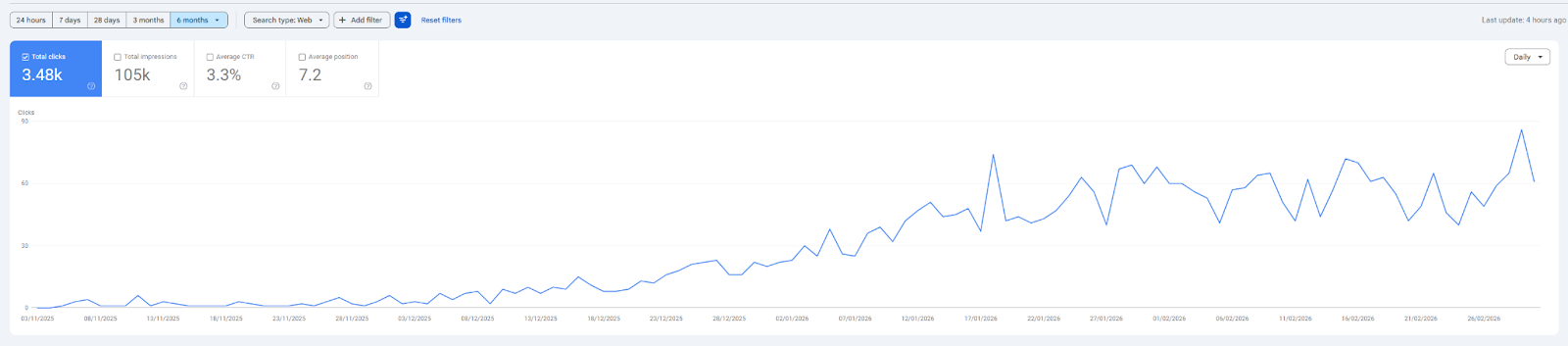
In case someone still does not believe in this, here are a few screenshots with some of our results from 2025 and further:
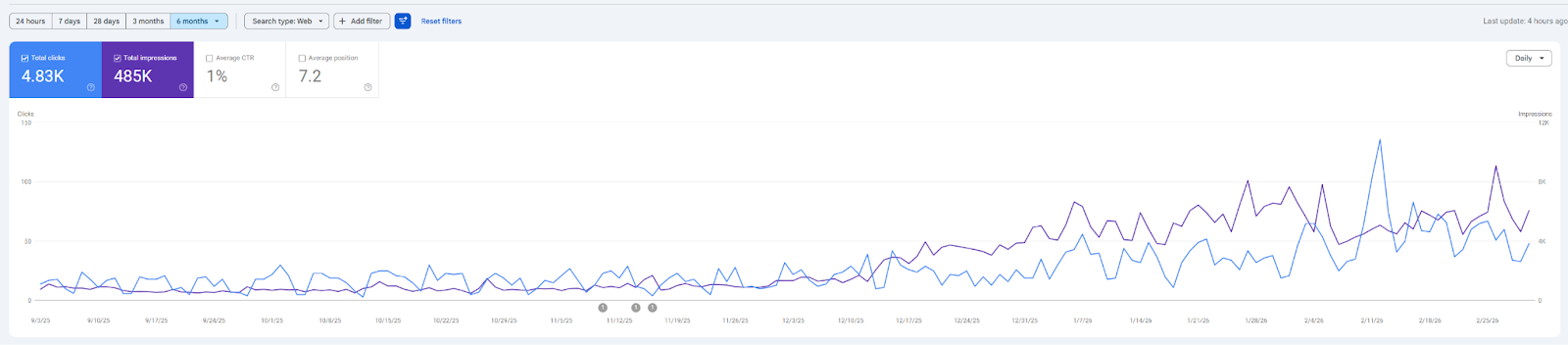
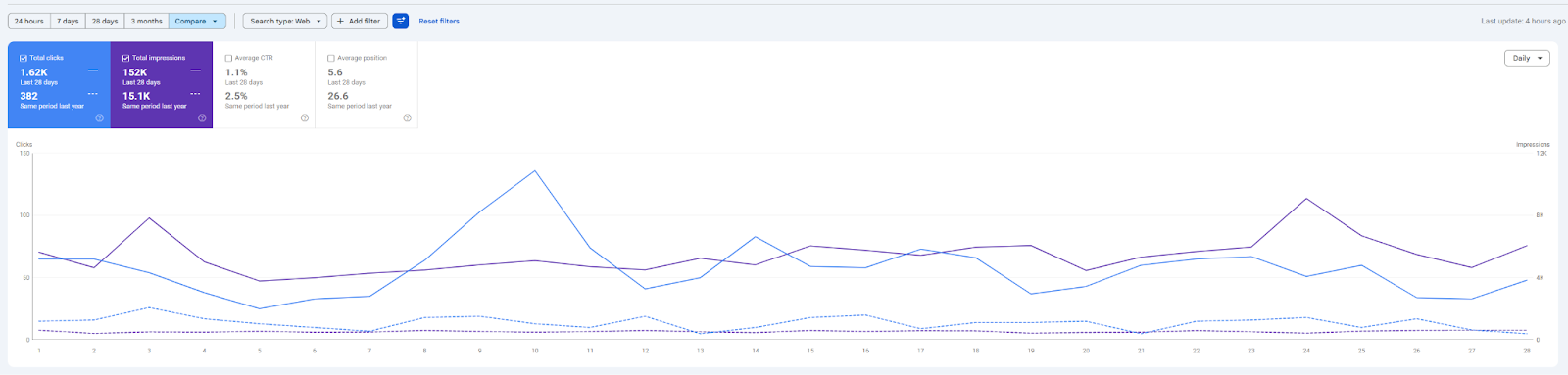
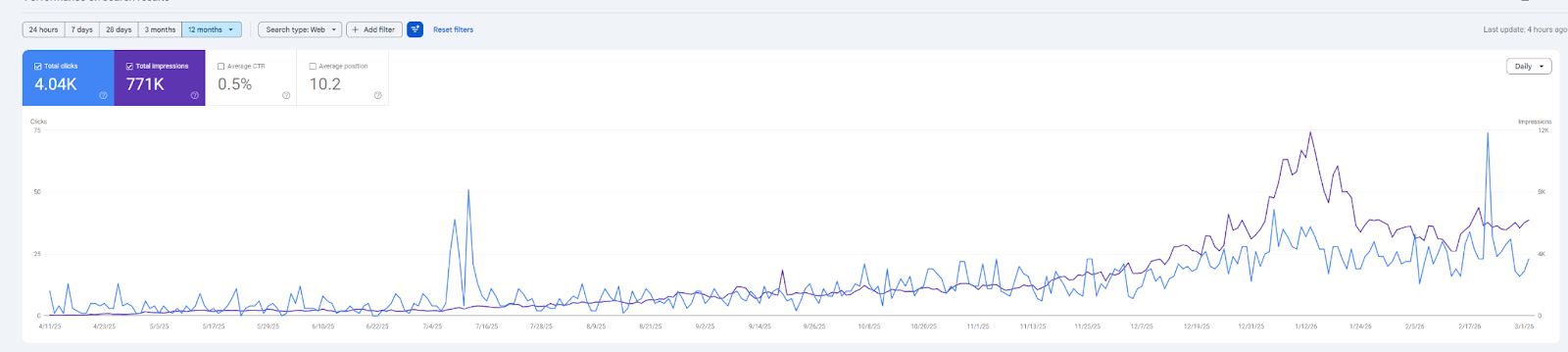
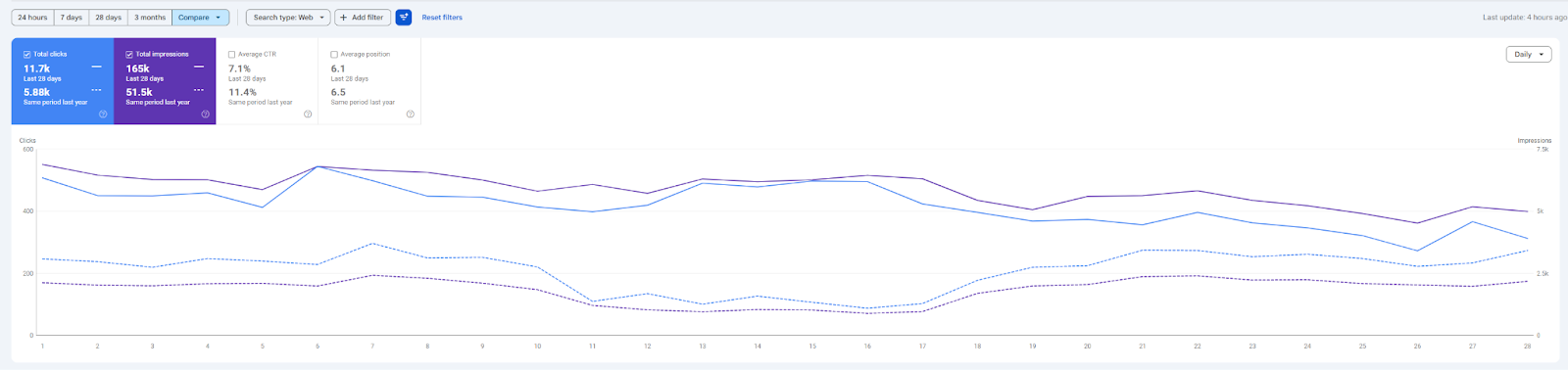
So why is GEO/AEO suddenly the new wave? HYPE. HYPE, HYPE. Everyone loves something new; everyone loves to be a first mover; everyone loves to be present on new channels.
But SEOs, there’s no need to panic over this. Imagine being part of these giant companies that are removing large parts of their workforce and replacing them with AI simply because their stock prices go up when they appear “super modern” and ahead of the curve.
“Cut 5,000 people in favor of AI” sounds like an amazing move, but is it really? Soon after, a public explanation usually follows, sometimes even an apology, and occasionally a reversal of the decision (IBM is a good example of this).
So, How Should We Approach GEO/AEO Compared to Traditional SEO?
This will probably be the most controversial part of the article, as I don’t want to go too deep into technical details, because: A) you can find much higher-quality technical content online (Dan Petrovic - a legend, Mike King, and others), and B) I want to “walk the talk” and share what we are actually doing in-house.
In reality, we didn’t do much differently than before. At Get Stuff Digital, we’ve always practiced SEO in our own way:
- Entity over keywords.
- Coverage instead of blatant content.
- Authority over marketplace links.
So, coming from the guy who built his early career and spent years in the black hat industry, are there some other methods to rank websites in 2026? For sure. But here, I’m speaking only about white hat methods that we currently apply for our clients (I’ll mention a few people you can follow for black hat methods later on).
Now, back to the point:
- On-page
- Tech
- Off-page
- Content
Just the basics. Semantics, internal linking, coverage - it still works. Being at the top of the SERPs is also connected to your website being cited more often by LLMs, too… Duh
I always love to plug in a great Reddit thread, so this is an interesting one. Do LLMs actually consider and take SERP positions in evaluation when presenting citations or not?
Hmm, but we mentioned a few other things (also aligned with the analysis that SemRush did):
- Being present on platforms your ICP is on (forums, socials, directories).
- Collecting user reviews.
- Structuring FAQs in a way that is helpful for your ICP.
- Good schema markup coverage.
And then I keep seeing these “new findings”:
- llm.txt - The biggest bullshit ever; 0 effects on it.
- Schema - Super good (WOW)
- Listicles - Super good (WHAT? NO WAY?!)
- Great content and authority matters (Oh, you must be joking…)
- Being top on SERP gets you the biggest coverage in LLMs (Are you sure, man?)
You get the point here. I’m also aware that many SEO agencies have done poor work in the past, so for them, GEO might look very similar to SEO (but it isn’t). They’ll end up selling those “juicy impressions” as the main KPI without even understanding what they actually mean.
Anyways, good GEO is not the same as SEO (if we consider SEO as what most standard agencies are doing). But good GEO is good SEO if SEO is done the way it should be done.
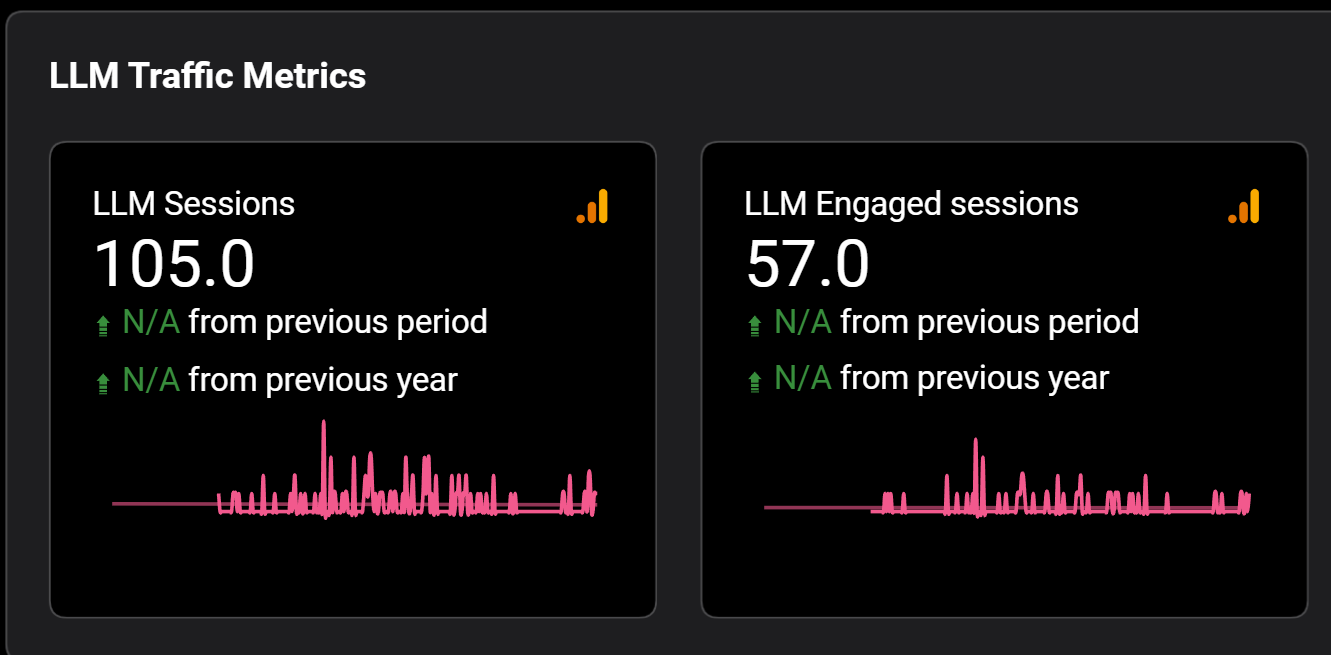
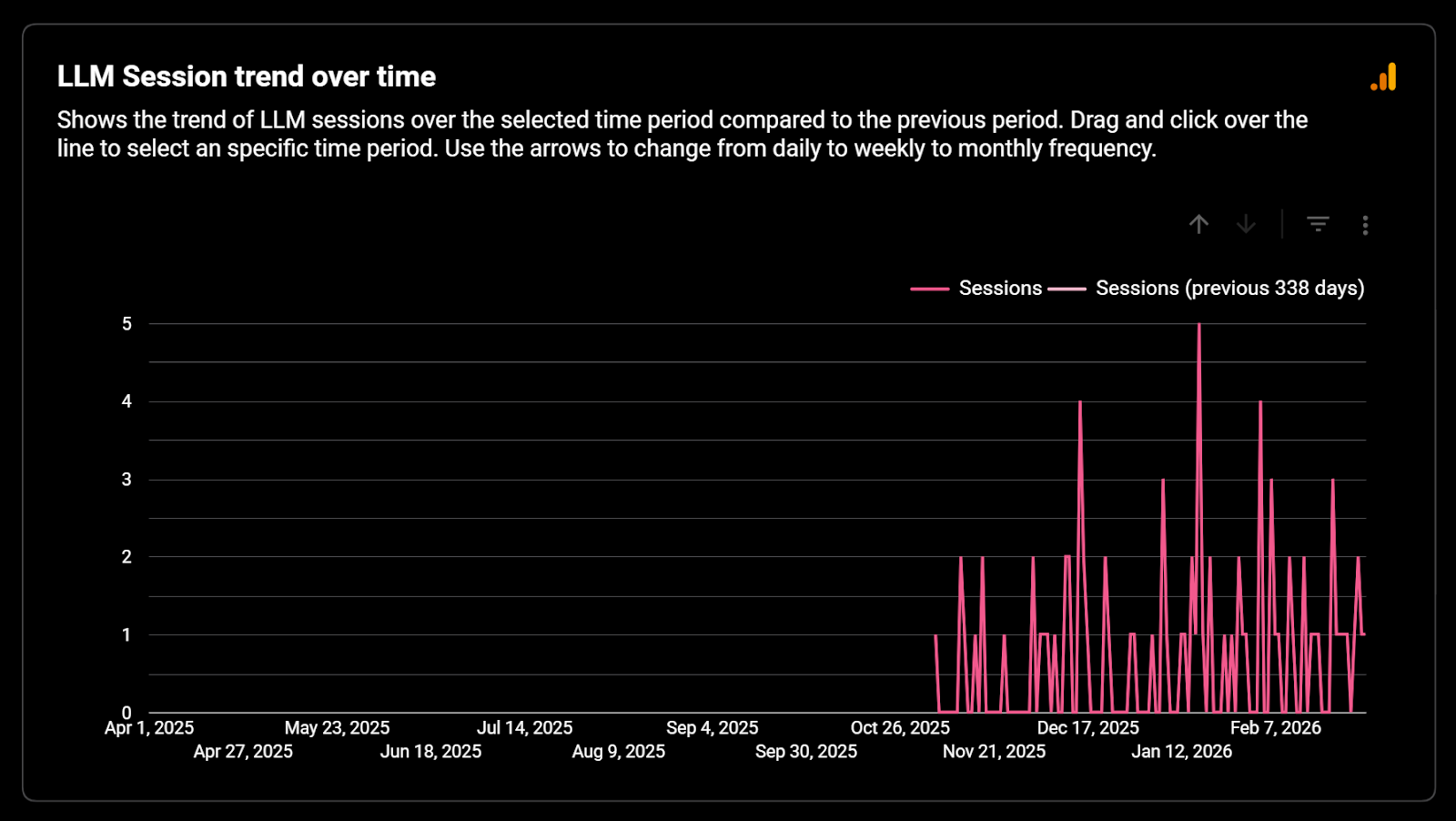
I will attach a few screenshots here where we did only SEO and still saw strong implications in citations. But to be fair, the way we’ve always approached SEO is a bit different. I’ve always seen it as a multidimensional channel that impacts other channels, not something that should exist separately from them, but as part of a cohesive ecosystem. To provide data for the rest of the channels, to be the best multidimensional KPI-oriented channel of all, and to be treated as a brand visibility and lead gen channel combined.
Hmm, maybe I just see things a bit differently than the agency that will send you the next invoice in 10 days for three blog posts and five links.
Do we do those things too? Sure. But everything we charge for is directly tied to the KPIs we set and the results you achieve.
So yeah, I kind of see the angle of why SEO struggled before with a lot of scammers. Also, all the GEO "bros" coming into your inbox nowadays can fall under that category. Why? Because of the things I wrote above.
Can good GEO be good SEO? Sure, it can. It is a simple deduction from the broad to the narrow, and as SEO is mostly the foundation for great GEO, great GEO should focus on establishing great SEO for your company and then build on it.
What About AI Tools?
Oh boy, I could not be happier to talk about this. Visibility tools are raising millions of dollars. Four weeks in, boom - $12 million in VC funding. You’ve got to love the AI bubble.
And what do those tools actually do? In the end, they just track probability.
Why would you pay for prompt tracking when every result is personalized based on the conversation a user previously had with the LLM? Sure, if you want to simulate a clean state and see what a prompt would return without prior context, it can make sense. But does that really justify the cost? I’m not so sure.
Plug your GA4 into a Google Looker Studio template, play around with custom tracking setups in GA4, and voilà - you have a FREE tracker for LLM mentions, excluding AI Overviews.
Also, go to Bing Webmaster Tools and see what they are tracking - I don't see prompts there yet. So maybe all of those newcomers are bullshitting about what they can track. Or maybe there is no bubble, and I live in one; who knows.
Also, I tested a bunch of them (I won’t name any), and their “effect” on your position in LLMs is ridiculous. AGAIN, if you followed the point I’ve been making, there’s no need to spend another minute explaining how basic GEO advice from a tool built by grads with no SEO experience will magically get your company cited more.
And how could I not mention my favorites: the so-called examples of AI benefits for your company.
Oh yeah. In recent studies and posts full of the same spam advice from various “experts,” we’ve supposedly seen some amazing results. Entire directories and subdirectories of websites built purely for GEO purposes started getting blasted by Google (post by Lily Ray) and completely wiped out, leaving their creators with thousands of useless pages that they eventually had to remove.
The effect on GEO? Non-existent. In fact, they even started losing mentions, which is the ironic part. They wanted to be cited more often in LLMs… or am I missing something?
Once again, doing fundamentally bad SEO will get you cited less in LLMs, too. Shocking, I know, but apparently still surprising for anyone who doesn’t actually understand what they’re doing.
So, to step away from the ironic and cynical tone of this article for a moment: should you use AI for your SEO in 2026, and how?
Yes, you should! Absolutely! The power of data processing is amazing; use AI in a way that can help you streamline all of the manual things you needed to do before. Feed LLMs with data, let them make summaries, let them pull cross-analysis, play with numbers - then take this and make conclusions by yourself.
Write content and do the research by yourself - use AI to enhance it. You can't let an LLM write content for you, as it will pull information that already exists; it will not cut through the AI slop spam that exists on SERPs currently. Use AI for grammar polishing, use AI to cross-analyze with resources online, use AI to analyze transcripts, forum groups, and testimonials - then put that in the content. Make it unique, make it original, make it the most comprehensive.
Regarding content for GEO - say more with less. I always loved and practiced that. But again, if you go with semantics and entity coverage, this is it - don't target and spam keywords blatantly; don't fill content with keywords just because you need to target them (we are not in 2010 anymore…)
I’ve read about chunking content for GEO. I’m not convinced, but I would still follow the best UX practices for readers and focus on delivering the highest quality. I really think you can’t go wrong with that.
Are Black Hat Methods Returning?
I think black hat methods are definitely making a comeback, especially in the GEO/AEO space.
If you want to learn more about these methods, be sure to check out Charles Floate - the GOAT to this day. From parasite SEO to pSEO to expired domain strategies and so much more, you should follow the guy.
For GEO, it is crazy easy - spam listicles all over the place as LLMs are still guided by quantity of mentions, not quality (and trust me, I am looking forward to the day this changes). But be careful, as Google just announced that it will tackle those self-proclaimed listicles soon - thank God, as I was sick of seeing this for the last 3 years (you can find one on our website too for testing purposes, where we showed how easy it was to affect LLM for mentioning GSD as one of the top GEO agencies…).
Apart from that, I really think black hat methods for GEO will be very common in the years to come. The results are pretty easy to infer. That’s why I said earlier this wouldn’t be a typical article about how LLMs logically pull citations. Instead, this is a raw look at the correlation between what actually drives results there - and it’s still not pretty.
My Final Thoughts on AI in 2026
To close, I would love to finish with my opinion on AI and search overall.
I really think AI is amazing for a lot of things. For search specifically, it opened new channels, which I find really exciting. Also, the possibilities with vibe coding tools and AI agents that streamline boring workflows and automate repetitive, time-consuming tasks are awesome.
But at the same time, we need to realize that AI is still in its early stages. Hallucinations are horrendous; it’s still far from real intelligence (how far, I can’t say). Keeping that in mind, we need to understand how to use these tools properly.
If you’re reading this, please don’t fall for the GEO “bros” and those miracle three-click setups you see on your favorite platform. That’s not how SEO, AEO, or GEO actually works. Use a solid SEO approach as your foundation, bring back the things you may have left sitting in the dusty drawer for years (schemas, cough cough), and invest in properly setting up your website for long-term success.
Start treating your marketing as an omnichannel effort, with SEO as part of it. Focus on doing everything for your ICP so your product can speak for itself. There can be thousands of AEOs, GEOs, and SEOs, but word-of-mouth marketing and product-led growth will never be beaten.
Also, don’t fall for scams, and always tie your SEO efforts to clear KPIs - without that, you’re just falling down the rabbit hole. Leads, newsletter signups, brand visibility, citation mentions, traffic, even those horrible impressions (this is a joke, by the way).
But please, connect your work to something you can actually track, and always demand full transparency from your agency or consultants. At any moment, you should know where your money is going, what they are doing on your website, and why.
Without that, you should start looking for another agency immediately.
That’s my two cents - maybe a bit more, given how long this article ended up being.
Hope you enjoyed it.
Nik Vujic is the founder of Get Stuff Digital, the agency brands call when they need growth that sticks. His mission? Build, optimize, and push clients beyond good enough.


